
Evaluating Multiple Stressors for the Mazama Pocket Gopher
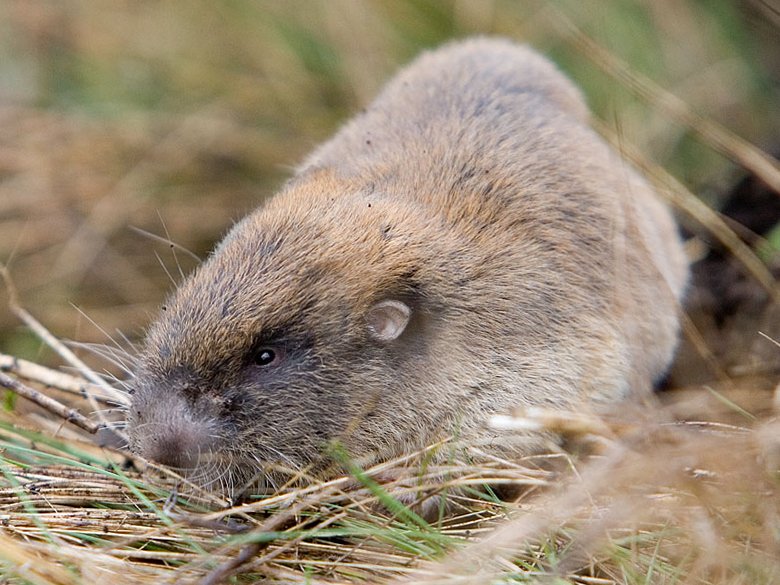
Mazama pocket gopher. Image credit: Rod Gilbert
Determining the best course of action for an at-risk species is challenging, particularly when multiple stressors act at the same time and may interact in ways that are not intuitive. The Mazama pocket gopher, a fossorial rodent endemic to the increasingly fragmented South Puget Sound prairies, is a clear example of this complexity. Its persistence depends on a limited grassland habitat that is continually shaped by recurrent fire and rapid shrub encroachment, each of which can alter habitat conditions over short or long time scales.
A key scientific challenge is understanding how these pressures interact. Vegetation shifts driven by invasive Scotch broom may restrict both tunneling and above-ground movement, while managed fire may temporarily suppress invasive species and modify habitat structure in a positive way. To examine these dynamics, our team is developing a suite of structured stressor scenarios that allow the combined effects of these forces to emerge through simulation rather than assumption.
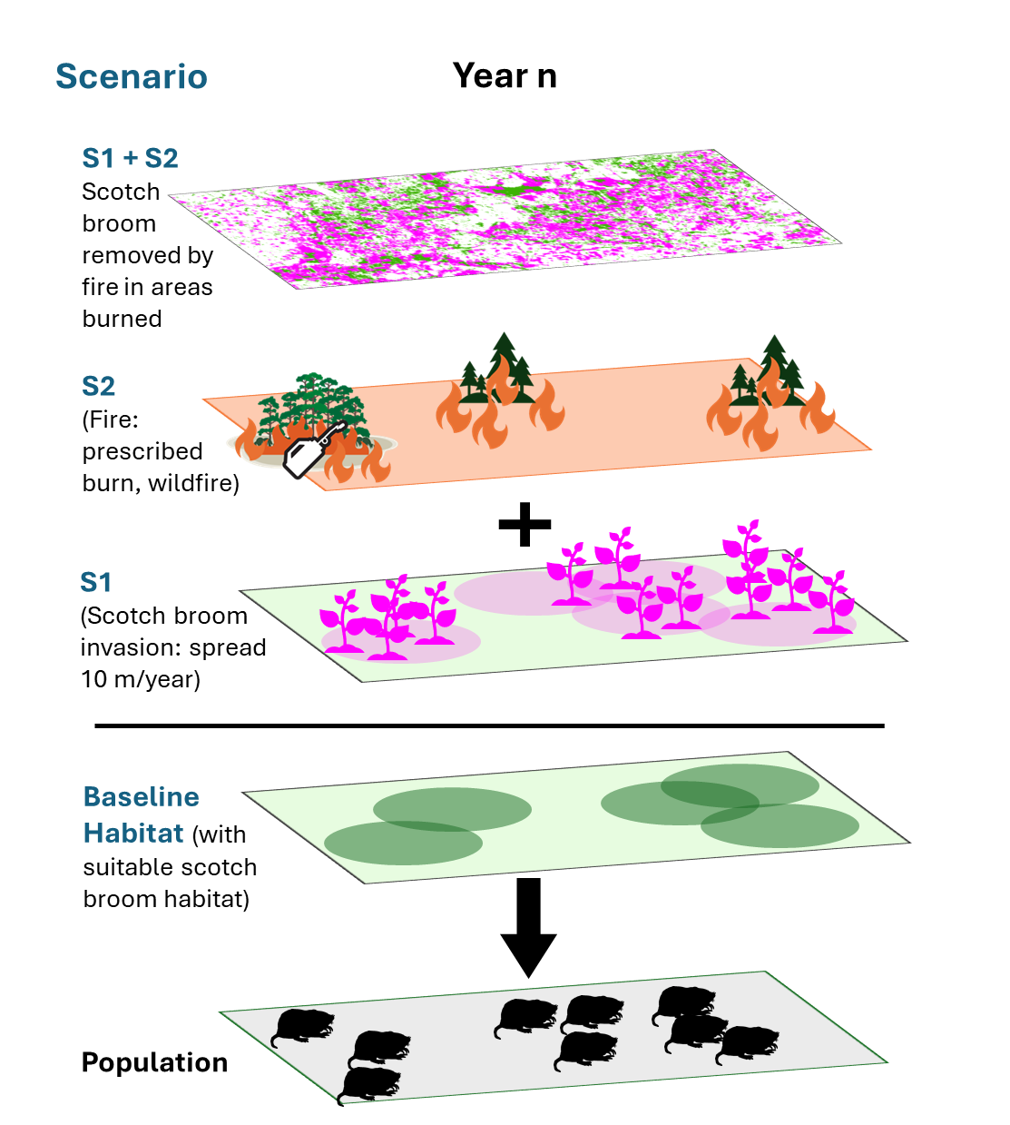
Multiple stressors, such as Scotch broom invasion and fire, may interact to impact Mazama pocket gopher populations. Image credit: CEG Inc. 2025
The goal is to determine whether multiple stressors produce impacts greater than the sum of their parts, and to identify where and when management actions may be most effective. The resulting outputs will provide a transparent, data-driven framework to support partners in interpreting cumulative risk and planning habitat interventions.
This work forms part of a broader collaboration with University of Washington researchers investigating how multiple stressors influence five key species around two U.S. military bases (see: Facing multiple threats). Watch this space for updates on additional species soon.