
Assessing Movement and Connectivity for Greater Sage-Grouse
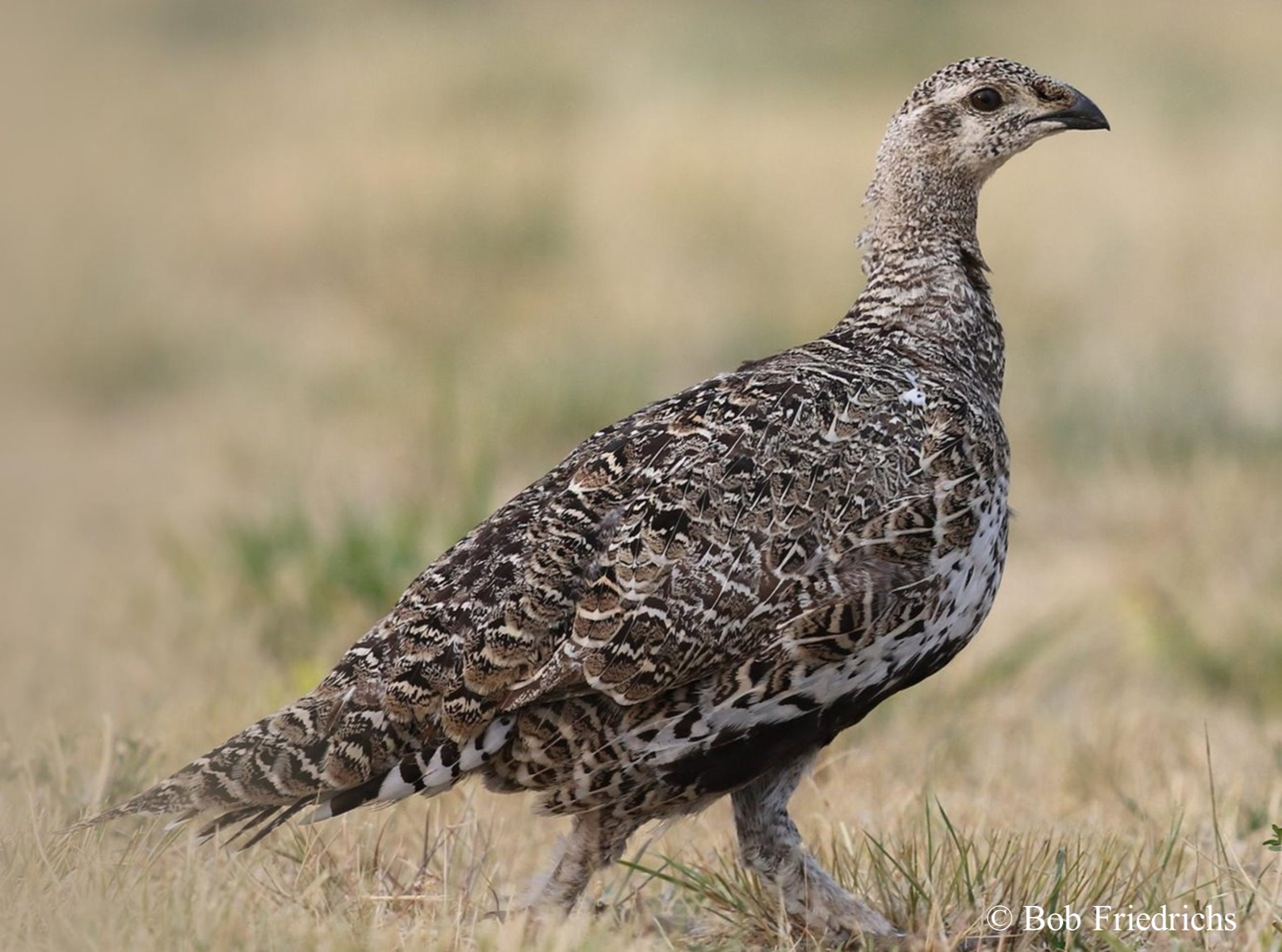
A female Greater sage-grouse in sage brush habitat. Image credit: Bob Friedrichs
Assessing landscape connectivity can be difficult for animals that shift between movement behaviours across seasons. Sensitivity to landscape features can vary, depending on whether individuals are rearing young or exploring. To map the features limiting functional connectivity for the imperiled Greater sage-grouse in Canada, we used Hidden Markov Models (HMMs) to identify distinct movement behaviours from tracking data, and Integrated Step Selection Function models to evaluate the influence of landscape features on movement patterns.
We found that this highly mobile, flighted bird responded strongly to landscape features, particularly when nesting and brood-rearing. The results highlight that movement constraints are dynamic: the same landscape features can influence movement differently depending on behaviour and season. These insights support the development of flexible, targeted approaches to maintaining functional connectivity in sagebrush ecosystems.
This work is now being finalized for peer-reviewed publication, and we look forward to sharing further details soon.
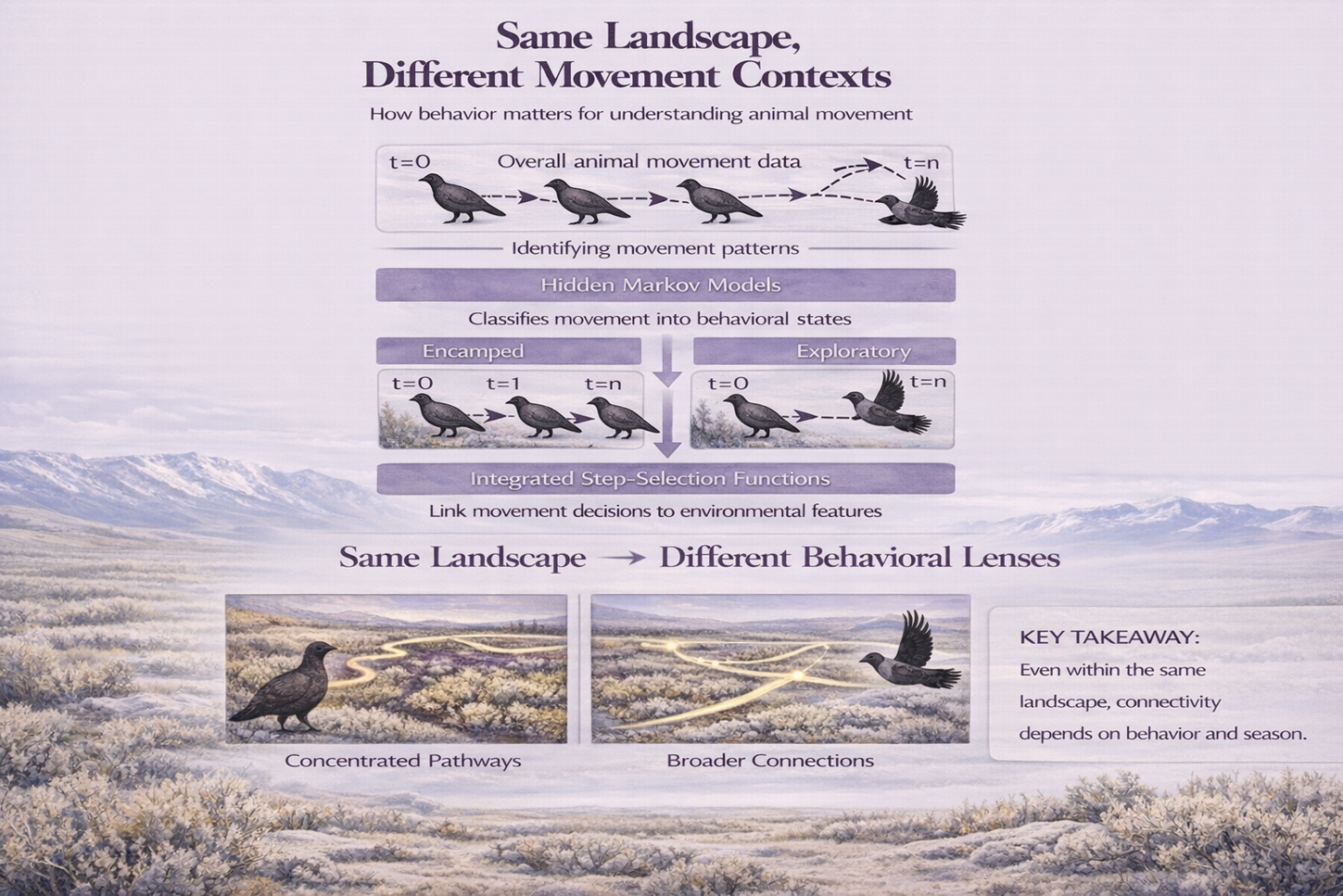
How movement behaviours in Greater sage-grouse matter when evaluating connectivity. Image: generated using ChatGPT (OpenAI).