
Modeling Dynamic Lark Habitat
Projecting habitat and population changes under the pressure of multiple stressors and management actions is an important challenge. To address this for Streaked Horned Larks, we recently developed a new cellular automata model and tool that allows us to forecast the dynamic spread of invasive plants like Scotch broom, while accounting for dynamic management interventions such as prescribed fire. As Scotch broom matures, it progressively reduces habitat quality, while fire resets invasion and changes habitat quality. By integrating this tool directly with our individual-based population simulations for Larks in the south Puget Sound, we can better model how both invasive species and control efforts shape species persistence over time, and in the face of other changes and stressors.
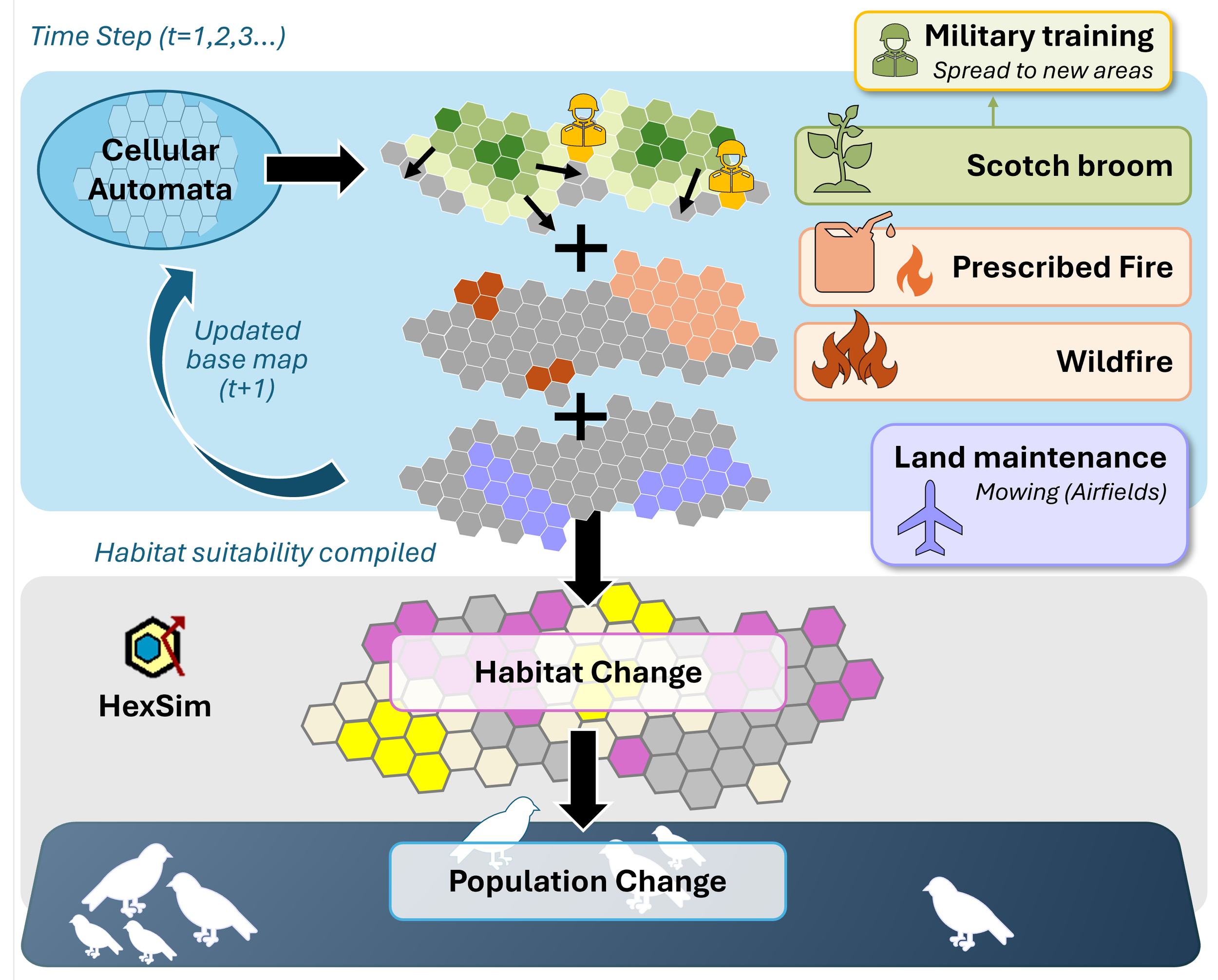
Diagram showing the integration of the Cellular Automata (CA) model and HexSim, to simulate habitat suitability and population changes in Streaked Horned Larks. Image credit: CEG 2026